

Greatest Right Backs in Handball History
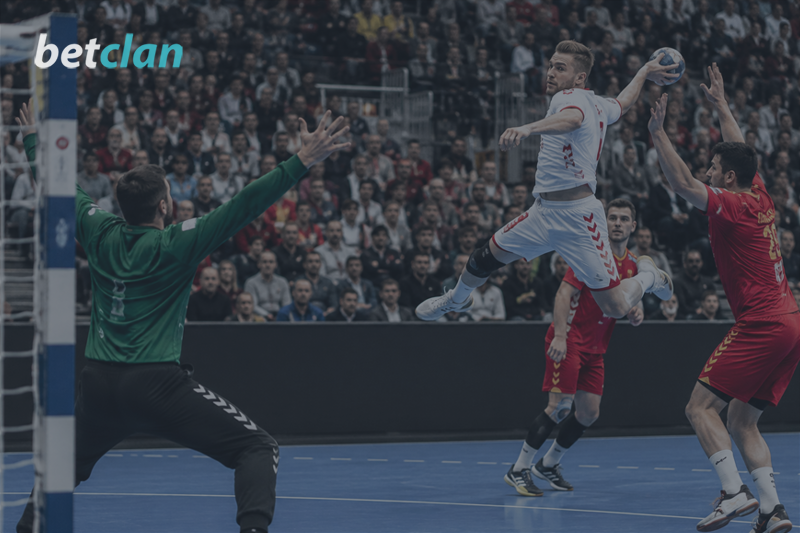
A ranking of the 10 greatest right backs in handball history, featuring Mathias Gidsel, Ólafur Stefánsson, Kiril Lazarov, Yoon Kyung-shin, Staffan Olsson and other legendary left-handed stars.
The players who redefined the right back position in handball
The right back position has produced some of the most spectacular players in handball history. Traditionally occupied by a left-handed player positioned on the right side of the back court, the role demands far more than a powerful long-range shot. The greatest right backs must be capable of breaking defensive lines, creating opportunities for teammates, combining with the right wing and line player, making decisions under pressure and delivering goals when organised defences leave very little space.
The position has also changed considerably between generations. Earlier right backs were often imposing shooters who could punish defensive formations from 9 or 10 metres. Modern players are expected to add explosive one-on-one movement, creativity, assists, fast transitions and tactical flexibility. Some can operate almost like centre backs, while others remain devastating long-range specialists. Comparing players from different eras is therefore difficult, but it also makes the history of the position particularly fascinating.
This ranking considers individual ability, performances for club and country, longevity, major trophies, scoring production, influence on tactical development and the level at which each player performed during his peak. International success is important, but it cannot be the only criterion because several extraordinary right backs represented countries that did not consistently challenge for major titles. The result is a list featuring Olympic champions, world champions, European champions, Champions League winners and some of the most prolific scorers the sport has ever seen.
1. Mathias Gidsel - Denmark
The modern right back who changed the expectations of the position
Mathias Gidsel has built one of the most extraordinary peaks ever seen from a handball player. Unlike the traditional giant right back who dominates primarily through long-range shooting, the Danish star attacks defensive gaps with acceleration, balance, timing and extraordinary control of his body. His ability to change direction at full speed has made him exceptionally difficult to stop in one-on-one situations.
Gidsel became a central figure for Denmark almost immediately after entering senior international handball. He won world titles with a Danish generation that established an unprecedented period of dominance and became one of the defining players of both Olympic and World Championship competition. His performances have combined huge scoring totals with playmaking, assists and an ability to repeatedly create high-quality opportunities against organised defences.
What separates Gidsel from many great scorers is his efficiency. He does not simply accumulate shots from distance. He repeatedly finds ways to penetrate towards six metres, force defenders into difficult decisions and create numerical advantages. His ability to perform at that level across successive major tournaments has already placed him among the greatest right backs ever, despite still having years available to extend an extraordinary career.
2. Ólafur Stefánsson - Iceland
The complete right back and one of handballs greatest tactical minds
Ólafur Stefánsson combined scoring, creativity, intelligence and leadership to a degree rarely seen at right back. The Icelandic left-hander was never merely a long-range shooter. He could control the rhythm of an attack, deliver defence-splitting passes, manipulate opponents and recognise spaces before they fully developed.
His club career included enormous success in Germany and Spain. Stefánsson won the EHF Champions League 4 times, first with SC Magdeburg and later with Ciudad Real, establishing himself as one of the defining players of European club handball during his generation. His performances were eventually recognised when he was selected as the outstanding right back from the first 20 years of the modern EHF Champions League era.
His contribution to Iceland was even more significant. Stefánsson was a central figure in the national team that won Olympic silver in Beijing in 2008 and bronze at the EHF EURO in 2010, the first 2 major medals in Icelandic handball history. With more than 1,500 international goals, elite club success and exceptional tactical intelligence, Stefánsson remains one of the strongest candidates for the greatest traditional right back the sport has produced.
3. Kiril Lazarov - North Macedonia
The record-breaking shooter who remained elite for decades
Kiril Lazarov is inseparable from the history of right-back scoring. The North Macedonian possessed one of the most feared left arms in handball and maintained extraordinary production across a senior career that lasted for more than 2 decades. Defenders knew exactly where much of the danger would come from and still struggled to prevent him from scoring.
Lazarov produced one of the greatest individual World Championship performances ever when he scored 92 goals at the 2009 tournament. His importance to North Macedonia was enormous because the national team frequently depended on his shooting, leadership and ability to generate goals against stronger opponents. He eventually surpassed 1,600 goals for his country.
His club career took him through Zagreb, Veszprém, Ciudad Real, Atlético Madrid, Barcelona and Nantes. With Barcelona he finally won the EHF Champions League in 2015. He also became the first player to surpass 1,000 Champions League goals and ultimately finished his career with an enormous total in Europes premier club competition. Lazarovs combination of longevity, records and sustained high-level production guarantees him a place near the top of any historical right-back ranking.
4. Yoon Kyung-shin - South Korea
A global scoring phenomenon who conquered the Bundesliga
Yoon Kyung-shin demonstrated that an elite right back could emerge outside the traditional European handball powers and dominate one of the strongest leagues in the world. Standing over 2 metres tall and possessing an exceptional left-handed shot, the South Korean became one of the most productive scorers of his generation.
Yoon was named IHF World Player of the Year in 2001, an exceptional achievement for a player representing an Asian national team. At major international tournaments, he repeatedly finished among the leading scorers and became top scorer at multiple World Championships. His individual output often remained extraordinary even when South Korea could not compete with the deepest European squads.
His performances in Germany removed any doubt that his international numbers were simply a consequence of carrying his national team. During a decade with VfL Gummersbach and later with HSV Hamburg, Yoon became Bundesliga top scorer on numerous occasions and accumulated almost 3,000 league goals. Few right backs in history have combined his volume, durability and consistency.
5. Staffan Olsson - Sweden
A central figure in one of handballs greatest national teams
Staffan Olsson was one of the key players of the legendary Swedish generation that dominated international handball during the 1990s and early 2000s. His appearance and distinctive playing style made him instantly recognisable, but his importance was based on far more than personality. Olsson was an intelligent left-handed right back capable of scoring, creating and organising from the back court.
Sweden won World Championships in 1990 and 1999 with Olsson playing a major role. He also collected World Championship silver and bronze medals and was part of the Swedish teams that won 4 European Championships. At the Olympics, Sweden reached the final on 3 occasions during his career, collecting silver in 1992, 1996 and 2000.
Olsson scored more than 900 goals for Sweden across more than 350 appearances, remarkable numbers considering the strength and depth of the team around him. At club level he enjoyed a major period with THW Kiel and established himself as one of the leading players in German handball. His combination of team success, longevity and tactical influence places him firmly among the greatest right backs ever.
6. László Nagy - Hungary
Size, power and intelligence in one extraordinary left arm
At more than 2 metres tall, László Nagy possessed the physical dimensions traditionally associated with an elite right back, but reducing his game to size and shooting power would underestimate his quality. The Hungarian combined enormous reach with excellent vision and an ability to create for teammates, making him considerably more versatile than a conventional distance shooter.
Nagy spent 12 years with Barcelona after joining the Spanish giants from Pick Szeged. He won the EHF Champions League in 2005 and 2011 and became one of the most important right backs in European club handball. He later returned to Hungary with Veszprém, helping the club establish itself as a permanent Champions League contender.
Hungary did not provide Nagy with the international trophy collection enjoyed by some players above him in this ranking, but his individual level was rarely questioned. He represented the national team more than 200 times, captained Hungary and was selected among the leading right backs at major competitions. His combination of physical dominance, passing and leadership made him a model for the complete modern back-court player.
7. Aleksandr Tuchkin - Soviet Union and Russia
A devastating shooter with 2 Olympic gold medals
Aleksandr Tuchkin represented an earlier model of the physically imposing right back. Standing approximately 2.03 metres tall, he had the ability to release powerful shots over defensive blocks and became one of the most feared left-handed back-court players of his era.
Tuchkin won Olympic gold with the Soviet Union at Seoul 1988 and, remarkably, returned to the top of the Olympic podium 12 years later while representing Russia at Sydney 2000. That enormous gap between Olympic titles demonstrates both his longevity and his capacity to remain effective while international handball changed significantly around him.
His club career included major periods with SKA Minsk and several German and European teams. Tuchkin belonged to an era in which the right back was expected to provide physical authority and long-range scoring, and few players performed that task more effectively. Two Olympic titles achieved more than a decade apart provide a particularly powerful argument for his historical status.
8. Jerzy Klempel - Poland
One of the great scorers from the earlier international era
Jerzy Klempel was one of Polish handballs first genuine global superstars. Capable of operating at right back and on the right wing, he became famous primarily for his extraordinary scoring ability and powerful left-handed shooting.
Klempel represented Poland more than 200 times and scored well over 1,000 international goals. He was part of the Polish team that won bronze at the 1976 Olympic Games, one of the landmark achievements in the history of the national team. At the 1980 Olympics in Moscow, he finished as the tournaments leading scorer with 44 goals.
His Olympic scoring record also included a remarkable 15-goal performance against Tunisia in 1976, a total that remained an important reference point decades later. Klempel later played club handball in Germany with Frisch Auf Göppingen. His career belongs to a different tactical and statistical era, but his scoring impact makes him impossible to exclude from a serious historical discussion about right backs.
9. Volker Zerbe - Germany
A rare combination of elite defence and back-court scoring
Volker Zerbe offers a different interpretation of greatness at right back. The German was an effective scorer and creator, but his defensive contribution made him particularly valuable. At approximately 2.11 metres tall, Zerbe brought exceptional reach and physical presence to both ends of the court.
Remarkably, he spent his entire professional club career with TBV Lemgo, playing in the Bundesliga for 2 decades. He accumulated almost 2,000 Bundesliga goals while also establishing a reputation as one of the outstanding defensive players of his generation. That combination is rare, particularly at a position usually judged primarily through attacking statistics.
With Germany, Zerbe won the EHF EURO in 2004 and collected silver at the 2003 World Championship and Athens 2004 Olympic Games. His career illustrates why evaluating right backs only by goals can be misleading. Zerbe influenced matches through shooting, passing, defensive organisation, blocking and physical presence, making him one of the most complete two-way players ever to occupy the position.
10. Alex Dujshebaev - Spain
A modern leader built for decisive moments
Alex Dujshebaev developed into one of the defining right backs of his generation through a combination of shooting, tactical intelligence, passing and competitive personality. The son of legendary playmaker Talant Dujshebaev, Alex built a career distinctive enough to establish his own place among handballs elite.
At club level, his years with Kielce placed him permanently in the centre of Champions League competition. He became an essential part of a team capable of challenging Barcelona, Paris Saint-Germain, Veszprém and the major German clubs, contributing both as a scorer and as an organiser from the right side of the back court.
His role with Spain has been equally important. Dujshebaev has collected major international medals and developed a reputation for producing important goals and assists in high-pressure knockout situations. Rather than depending exclusively on long-range power, he combines tactical understanding with the ability to move inside, connect with the line player and create opportunities elsewhere across the attack.
What makes a great right back in handball?
The left-handed advantage
Most elite right backs are left-handed because the angle naturally opens towards the centre of the court. A left-handed player receiving the ball on the right side can keep the shooting arm away from the sideline, creating a better angle for long-range attempts, passes and penetrations. This is why world-class left-handed players are particularly valuable and why finding an elite right back can transform the balance of a team.
The position has evolved beyond long-range shooting
Historically, many right backs were physically imposing players expected to rise above defensive blocks and generate powerful shots from distance. Players such as Tuchkin, Yoon, Nagy and Lazarov became masters of that style, although each possessed additional qualities.
Modern defensive systems have changed the demands of the position. Greater mobility and aggressive contact often make uncontested long-range shooting difficult. Right backs increasingly need the acceleration to attack gaps, the passing ability to release wings and line players and enough tactical understanding to temporarily operate as playmakers.
Mathias Gidsel represents perhaps the clearest example of this evolution. He does not resemble the classic towering right back, yet his movement, acceleration and efficiency allow him to repeatedly penetrate elite defences. The position has therefore evolved from one dominated primarily by height and shooting power into one where several very different physical profiles can succeed.
Several generations produced very different right-back legends
One of the difficulties in ranking the greatest right backs in handball history is that every era demanded something slightly different. Jerzy Klempel competed in a game with different defensive structures and a different competitive calendar from the one faced by Gidsel. Tuchkin represented the enormous long-range threat associated with the late Soviet school, while Staffan Olsson operated inside a Swedish system built on collective intelligence and tactical discipline.
The following generation produced specialists such as Stefánsson, Lazarov, Nagy, Yoon and Zerbe. They were all left-handed back-court players, yet their styles differed dramatically. Stefánsson was an exceptional creator, Lazarov became a scoring machine, Nagy offered extraordinary size and vision, Yoon produced remarkable shooting numbers and Zerbe added elite defensive quality.
The modern era has continued expanding the definition of the position. Dujshebaev brought greater playmaking responsibility, while players such as Dika Mem have combined exceptional athleticism with long-range shooting. Gidsel has taken the transformation even further by making explosive movement, timing and one-on-one penetration central to the position.
Who is the greatest right back in handball history?
There is no completely objective answer because individual statistics, trophies and tactical influence must all be weighed differently. Ólafur Stefánsson has one of the strongest complete résumés, combining 4 Champions League titles with historic international success for Iceland. Kiril Lazarov owns scoring achievements that may remain relevant for generations, while Yoon Kyung-shin produced extraordinary numbers in international handball and the Bundesliga.
Staffan Olsson possesses one of the greatest collections of international medals among right backs, and László Nagy represented elite European club handball for almost 2 decades. Earlier legends such as Tuchkin and Klempel laid important foundations for the position, while Zerbe demonstrated that defensive excellence could be just as significant as spectacular shooting.
Mathias Gidsel, however, has already created a historical résumé that is exceptionally difficult to overlook. His sustained dominance in major tournaments, individual recognition, scoring efficiency and central role in one of the strongest national-team eras ever have redefined what is possible from the right-back position. Whether his career ultimately becomes the undisputed benchmark will depend on what comes next, but he has already earned a place at the very top of the historical conversation.
The greatest right backs in handball history do not all look or play alike. Some dominated from 10 metres, others attacked spaces at extraordinary speed, while the most complete could score, create and defend at elite level. What links all 10 players is their ability to make the right side of the back court one of the most decisive positions on the handball court.
Learn how football betting markets work, from match odds and goals to player bets, live markets, bookmaker margins and smarter staking decisions.
A definitive, professional ranking of the top 10 greatest basketball players of all time. Clear criteria, era context, advanced insights, and a balanced case for each legend.
Bitcoin casinos are revolutionizing online gambling, offering unmatched privacy, instant transactions, and provably fair gaming through blockchain technology.
Discover how virtual sports drive traffic to betting sites through 24/7 action, fast results, immersive technology and crossover appeal in iGaming.
A definitive ranking of the 10 footballers with the most official hat-tricks, featuring Erwin Helmchen, Josef Bican, Pelé, Fernando Peyroteo and other legendary goalscorers.
Avoid common mistakes in betting and improve your chances of success in the world of sports betting.
Explore the best CS:GO players of all time, from s1mple and dev1ce to ZywOo, GeT_RiGhT, coldzera, NiKo and other Counter-Strike legends.
Explore the best volleyball spikes of all time, from iconic power hitters to modern aerial stars, and discover the attacks that changed matches, tournaments and the history of volleyball.
A detailed look at the best cricket captains in history, analysing leadership, trophies, tactical intelligence, dressing room influence and long-term impact on the game.
Discover why Saudi Arabia is investing heavily in football, its geopolitical strategy, and the impact on global sports, player transfers, and betting markets.