

Greatest South American Handball Players
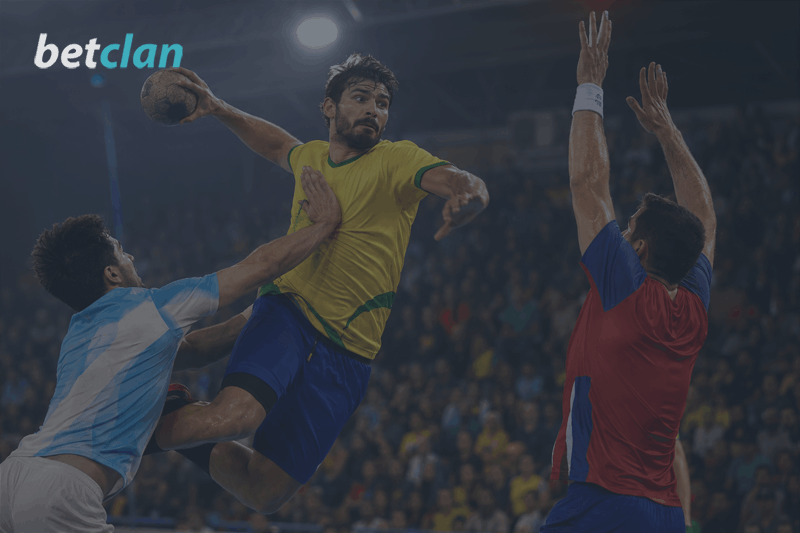
Explore the South American handball legends who shaped the sport through elite performances, European careers, national team success and lasting influence.
The legends who lifted South American handball onto the world stage
South American handball has grown remarkably over the last few decades, moving from a mostly regional sporting scene to an increasingly respected presence in World Championships, Olympic Games, European clubs and major international tournaments. For anyone who follows the sport, studies team performance or looks for competitive context before checking today handball predictions, understanding the greatest South American handball players of all time helps explain how Brazil, Argentina, Chile and other countries from the region built their own identity within the game.
Unlike Europe, where handball has deeper tradition, stronger professional leagues and better developed structures, South America had to create its path through talent, resilience, player exportation and strong national team work. Many of the greatest South American names built careers in Europe, faced highly competitive environments and proved that talent from the region could compete with the best players in the world.
This list is not based only on titles. The legacy of a handball player is also measured by influence on the national team, ability to open doors for future generations, longevity, impact in European clubs, tactical adaptation and symbolic importance for the growth of the sport in each country. Some players stood out through physical power, others through intelligence, creativity, leadership, defence, offensive efficiency or presence in historic moments.
What makes a great South American handball player special?
A great South American handball player often needs to overcome more barriers than many European athletes. Distance from the main competitive centres, lower media exposure, fewer resources and the need to adapt to foreign leagues make the journey more demanding. For that reason, when a player from South America succeeds at international level, that achievement carries special value.
The best players from the region combine technique, mental resistance, competitive courage and a strong ability to learn. Many had to leave their countries early to develop in stronger leagues. Others became national symbols by leading teams that began to challenge traditional powers. In handball, where rhythm, physical contact and decision making are constant, that capacity for adaptation is decisive.
It is also important to highlight the role of Brazilian womens handball, which placed South America at the top of the world. The world title won by Brazil in 2013 was a historic moment for the whole continent and turned several players into absolute references. In the mens game, Argentina and Brazil were for many years the main regional powers, while Chile produced players of huge importance for the consolidation of the sport in the country.
Eduarda Amorim
The biggest female reference in South American handball
Eduarda Amorim, widely known in the handball world as Duda Amorim, is probably the most influential South American female player in the history of the sport. The former Brazilian left back built an extraordinary career in Europe, especially with Györ, where she established herself as one of the best players of her generation. Physically strong, intelligent in her reading of the game and dominant on both ends of the court, Duda was much more than a scorer.
Her defensive impact was one of the most important features of her career. Many backcourt players are judged mainly by goals, but Duda had complete influence. She defended with controlled aggression, attacked with power, helped organise the first line and was capable of deciding major matches. That combination made her a rare player.
The highest point with the Brazilian national team came with the 2013 world title, a historic achievement for Brazil and for South America as a whole. At individual level, her recognition as one of the best players in the world confirmed what was already clear on the court: Duda Amorim was not just a regional star, she was a global reference.
Alexandra do Nascimento
Speed, finishing and longevity at the highest level
Alexandra do Nascimento is another essential name in Brazilian and world handball. A right wing of enormous quality, she stood out through speed, jumping ability, cold finishing and the capacity to appear in decisive moments. For many years, she was one of the main offensive weapons of the Brazilian national team and one of the most respected players in her position.
Her path is also an example of longevity. Alexandra remained competitive for many years, something especially difficult in a position that demands explosion, speed and constant precision. Her international career helped strengthen the image of Brazil as a real power in womens handball.
The 2013 world title and major individual recognition placed Alexandra at a historic level. She was one of the players who showed that South America could develop athletes capable of dominating on major stages, not only competing occasionally. Her influence goes beyond numbers and medals, because she inspired an entire generation of young Brazilian players.
Diego Simonet
The Argentine brain who shone in the European elite
Diego Simonet is one of the greatest male players in the history of South American handball. An Argentine centre back, he became known for creativity, vision, rhythm changes and ability to lead attacks against top defences. His career with Montpellier consolidated him as one of the most successful South American athletes in European handball.
Simonet was not only a technical player. He was an organiser, a thinker on the court, an athlete capable of accelerating or slowing the game depending on the moment. That intelligence was essential for the Argentine national team, which had him as its main offensive reference for many years. Alongside other important names from the Argentine generation, he helped turn Los Gladiadores into a respected international team.
The importance of Diego Simonet also lies in the way he opened doors for Argentine players in European clubs. His career showed that a South American athlete could not only adapt to the elite, but also become a key figure in competitive teams. For Argentina, Simonet became a symbol of ambition, leadership and professional evolution.
Bruno Souza
Brazilian power and international respect
Bruno Souza was one of the major names in Brazilian mens handball. A backcourt player with great physical size, shooting power and competitive presence, he represented an important phase in the growth of Brazil on the international stage. His experience in European handball, particularly in Germany, gave him a very relevant competitive dimension.
At a time when Brazilian mens handball was still looking for greater global recognition, Bruno was one of the players who helped raise the standard. He faced elite opponents, competed in demanding contexts and showed that Brazil had athletes capable of playing in strong leagues.
His legacy is linked to the affirmation of the Brazilian player outside the continent. His presence in European clubs and with the national team helped give credibility to Brazilian mens handball. Even in a sport where European dominance is very strong, Bruno Souza managed to build a respected career and opened space for other Brazilian players to be watched with more attention.
Bárbara Arenhart
The goalkeeper who symbolises resilience and leadership
Bárbara Arenhart, known as Babi, is one of the greatest goalkeepers in the history of South American handball. Her career is marked by international experience, spells in several European championships and a decisive role with the Brazilian national team. In such a specific position as goalkeeper, Babi stood out through presence, elasticity, reading of shots and emotional strength.
Being a goalkeeper in handball requires a particular combination of courage and intelligence. Every save can change the rhythm of a match, break the confidence of the opponent or push a comeback. Babi built her reputation precisely through that ability to appear in critical moments.
The 2013 world title placed her at the centre of one of the greatest collective achievements in South American sport. More than an important player, Babi became a reference for leadership, professionalism and persistence. Her career shows how South America also produced goalkeepers of international level.
Ana Paula Rodrigues
Offensive intelligence and influence in the Brazilian golden generation
Ana Paula Rodrigues was one of the most important players of the golden generation of Brazilian womens handball. A centre back and backcourt player with great technical quality, she stood out through her ability to organise, accelerate and find offensive solutions. Her intelligence on the court allowed Brazil to vary rhythms and create opportunities in high difficulty matches.
Her role in the 2013 world title was part of an extremely strong collective structure. Brazil had speed, defence, experience and individual talent, but also needed players capable of connecting all those elements. Ana Paula was one of those fundamental pieces.
Her career in European clubs reinforced the image of a complete player, capable of competing against the best. Her legacy is linked to the tactical sophistication of Brazilian womens handball, in a period when the national team stopped being merely competitive and became a real contender against any opponent.
Mayssa Pessoa
Security in goal and winning mentality
Mayssa Pessoa is another Brazilian goalkeeper with enormous historical importance. Throughout her career, she established herself in European clubs and with the national team, contributing to the strongest period of Brazilian womens handball. Her presence in goal gave confidence and allowed the team to defend with greater aggression.
In modern handball, an elite goalkeeper is not only there to stop shots. She also starts fast breaks, communicates with the defence, reads offensive patterns and influences the team emotionally. Mayssa showed many of these qualities throughout her career.
Her importance to South American handball is connected to the international recognition of Brazilian goalkeepers. Together with Babi Arenhart, she helped show that Brazil also had a strong school in one of the most difficult positions in the sport.
Chana Masson
A historic reference in Brazilian handball
Chana Masson deserves a place among the great South American figures because of her impact on the Brazilian national team and her importance across different competitive cycles. An experienced goalkeeper, she was part of a generation that helped Brazil gain consistency in the Pan American context and prepare the way for greater achievements.
Her career represents a construction phase. Before a national team reaches the top of the world, it needs athletes who consolidate competitive habits, international mentality and experience in decisive matches. Chana was one of those athletes, contributing to the growing respect for Brazilian womens handball.
Her legacy should not be measured only by media visibility. Very often, the foundations of a sport are created by players who compete for years, support cycles and raise the internal level. Chana Masson is part of that history.
Emil Feuchtmann
The Chilean symbol of international persistence
Emil Feuchtmann is one of the biggest references in Chilean handball. An experienced centre back, he built a long career, with spells in several European clubs and constant presence in the Chilean national team. For a country with less international tradition than Brazil and Argentina, the importance of Emil is huge.
His value lies in consistency and in the ability to represent Chile on demanding stages. Over the years, he helped bring greater visibility to Chilean handball and showed that the region could produce players with technical quality, game intelligence and competitive spirit.
Feuchtmann also represents the importance of pioneers. Not all great players come from national teams that fight for world titles. Some are great because they raise the level of their country, inspire new athletes and make possible an evolution that once seemed distant. In that sense, Emil Feuchtmann is an essential figure in the South American history of handball.
Other names who deserve recognition
An analysis of the greatest South American handball players is not complete without mentioning other relevant athletes. Andrés Kogovsek from Argentina was for many years a respected figure for leadership and experience. Federico Fernández also had an important role in the Argentine national team, as did Sebastián Simonet and Pablo Simonet, who helped strengthen one of the most competitive generations of Los Gladiadores.
In Brazil, names such as Deonise Cavaleiro, Fernanda da Silva, Elaine Gomes, Haniel Langaro, Thiagus Petrus and Maik Santos also contributed significantly to the recent history of the sport. Some stood out more in the club context, others with the national team, and others through the ability to keep Brazil competitive across demanding international cycles.
Names such as Deonise Cavaleiro, Fernanda da Silva, Elaine Gomes, Haniel Langaro, Thiagus Petrus and Maik Santos also contributed significantly to the recent history of the sport. Some stood out more in the club context, others with the national team, and others through the ability to keep Brazil competitive across demanding international cycles. Later in the article, readers can also find broader international handball coverage through handball coverage, without changing the focus from the South American players who shaped this list.
The impact of Brazil on South American handball
Brazil is historically one of the biggest forces in South American handball, especially in the womens game. The 2013 world title changed the way the world viewed the region. Until then, many South American teams were seen as competitive, but rarely as genuine contenders for the top. The Brazilian triumph broke that perception.
Players such as Eduarda Amorim, Alexandra do Nascimento, Bárbara Arenhart, Ana Paula Rodrigues and Mayssa Pessoa formed an elite generation. The success did not appear by chance. It came from individual talent, European experience, strong collective identity and courage to face traditionally superior teams.
In the mens game, Brazil also produced important players and established itself as one of the strongest teams in the region. Although global dominance remains heavily connected to Europe, Brazilian presence in major competitions helped increase respect for South American handball.
The importance of Argentina and Chile
Argentina played a fundamental role in the evolution of South American mens handball. The generation led by Diego Simonet gave greater international visibility to Los Gladiadores and helped the team compete with more personality against European opponents. Argentine handball became associated with organisation, intensity and collective intelligence.
Chile, in turn, represents a story of gradual growth. Players such as Emil Feuchtmann helped place the country in important international stages and gave new generations a reference point. Even without the same tradition as Brazil and Argentina, Chile managed to build an increasingly respected competitive identity.
This diversity is important for the future of the sport. The more South American countries can develop competitive players, the stronger the regional ecosystem will become. Growth depends on better domestic leagues, technical development, talent exportation and stronger media exposure.
Conclusion
The greatest South American handball players are not only athletes with strong numbers or long careers. They are figures who changed the international perception of the sport in the region. Eduarda Amorim and Alexandra do Nascimento placed Brazil and South America at the centre of world womens handball. Diego Simonet showed that an Argentine player could become a key figure in the European elite. Bruno Souza opened doors in Brazilian mens handball. Bárbara Arenhart, Ana Paula Rodrigues, Mayssa Pessoa, Chana Masson and Emil Feuchtmann complete a group of athletes who helped build respect, identity and legacy.
South American handball continues to face challenges, but the history of these players proves that the region has the talent to compete at the highest level. Some won world titles, others shone in European clubs, while others became national symbols. What they all share is that they left a mark that goes beyond the court. Their impact lives through the inspiration they gave to new athletes, the visibility they brought to the sport and the certainty that South America also belongs in the global history of handball.
The expanded 2026 FIFA World Cup format could create more upsets, with 48 teams, third-place qualifiers, travel demands and climate challenges shaping the tournament.
Delve into the realm of sports betting with a comprehensive exploration of key strategies that can give you an edge over the odds.
Effective bankroll management ensures that you can enjoy the thrill of betting while minimizing the risk of significant financial losses.
Africa is rapidly emerging as a key market for sports betting, driven by a young, sports-loving population, increasing internet access, and relaxed regulations. While Nigeria and South Africa lead the industry, countries like Kenya, Tanzania, and Ghana are also growing quickly.
Discover strategies and practical tips to maximize your profits with sports betting. Explore the fundamentals, types of bets, bankroll management, and avoid the most common mistakes among bettors.
Discover how virtual sports drive traffic to betting sites through 24/7 action, fast results, immersive technology and crossover appeal in iGaming.
Learn what back and lay mean in cricket betting, how liability works, and how to read exchange markets safely with simple examples from cricket and IPL betting.
A detailed ranking of 10 of the longest handball matches in history, featuring World Championships, Olympic Games, EHF EURO classics and unforgettable double extra-time battles.
Wimbledon 2026 opens on June 29, bringing two weeks of grass-court tennis, shifting odds, player form checks, and a busy betting period.
Discover the 10 best football captains of all time, with a complete analysis of their leadership, achievements, influence, personality, and lasting legacy in world football.