

NBA Players with the Best Handles Ever
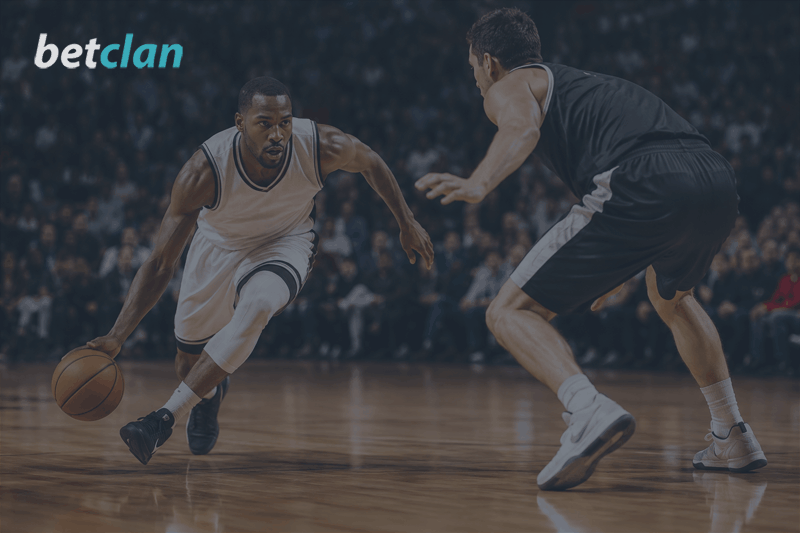
Discover the NBA players with the best handles ever, from Kyrie Irving and Allen Iverson to Stephen Curry, Tim Hardaway and other legendary ball handlers.
The greatest ball handlers in NBA history
Ball handling is one of the most spectacular and technically demanding skills in basketball. A player with elite handles can control the pace of a possession, escape pressure, break down defenders, create shooting opportunities and open passing lanes that would otherwise never exist. The greatest dribblers in NBA history did much more than perform flashy crossovers. They used the basketball as an extension of their body, manipulating defenders with rhythm, timing, acceleration and deception.
Ranking the NBA players with the best handles ever is naturally subjective. Different eras produced very different styles of basketball, and the rules surrounding dribbling, defensive contact and isolation play have changed considerably. Some players relied on explosive crossovers, others on hesitation moves, changes of direction, spins or exceptional control in crowded areas of the court.
The most important factor is not simply how impressive a dribble looked. The best handles consistently created an advantage. They allowed a player to reach the rim, separate from a defender, escape a double-team or create an open shot for a teammate. With that broader definition in mind, these players belong in any serious discussion about the greatest ball handlers the NBA has ever seen.
1. Kyrie Irving
The complete package of creativity and control
Kyrie Irving is widely regarded as one of the most gifted ball handlers basketball has ever produced. His dribbling combines almost every major element of elite guard play: crossovers, hesitations, spins, behind-the-back moves, changes of pace and incredibly precise control around the basket.
What makes Irving particularly special is his ability to maintain control in extremely tight spaces. Many players can perform spectacular moves when given room, but Irving regularly changes direction while surrounded by defenders. His low dribble and outstanding balance allow him to protect the ball while moving through traffic without losing momentum.
His handles are also directly connected to his finishing ability. Irving can begin a possession with a hesitation near the perimeter, beat the first defender with a crossover and then use another change of direction inside the paint before finishing from an unusual angle. The dribble is not simply entertainment. It creates the entire scoring opportunity.
Few players have ever displayed such a broad collection of moves while maintaining this level of efficiency and control. For pure combination of creativity, unpredictability and technical execution, Irving has a convincing argument for the best handles in NBA history.
2. Allen Iverson
The crossover that influenced a generation
Allen Iverson changed how an entire generation thought about dribbling. His famous crossover became one of the defining basketball moves of the late 1990s and early 2000s, but reducing Iverson to a single move would underestimate the sophistication of his ball handling.
Iverson used speed and body movement to make defenders commit before suddenly changing direction. His crossover was particularly effective because his shoulders, hips and eyes often suggested that he was attacking one side before the ball moved explosively in the opposite direction.
At his best, Iverson could create separation against virtually any individual defender. His relatively small size made ball security essential, and his ability to keep the dribble alive under pressure allowed him to survive against larger and more physical opponents.
His influence is almost as important as his technical ability. Countless guards who came after him incorporated elements of Iversons crossover and isolation style into their own games. Modern perimeter basketball would look very different without his impact.
3. Stephen Curry
Elite handles combined with historic shooting range
Stephen Curry is primarily celebrated for his shooting, but his extraordinary handles are a major reason that his shooting is so difficult to defend. Curry can change direction repeatedly while maintaining balance, allowing him to create enough separation to release a shot from almost anywhere beyond the three-point line.
His dribbling is particularly dangerous because defenders must respect his shooting range much earlier than they would against most guards. A small hesitation or change of pace can therefore force a defender to react aggressively, creating an opportunity for Curry to attack the open space.
Curry also excels at keeping his dribble alive after the first move fails. He can retreat, change direction, move behind his back and restart an attack without losing control. This ability to improvise has produced some of the most memorable possessions of his career.
His handles may appear less physically aggressive than those of Iverson, but their effectiveness is undeniable. Curry combines technical control with constant movement and elite shooting, creating one of the most difficult individual defensive assignments in basketball history.
4. Isiah Thomas
A pioneer of elite point guard ball handling
Long before modern guards turned elaborate dribbling combinations into a regular feature of NBA basketball, Isiah Thomas was breaking down defenders with remarkable control. The Detroit Pistons legend possessed tremendous speed, quick hands and an advanced understanding of how to manipulate defensive positioning.
Thomas could dribble through pressure, change direction at high speed and maintain control while navigating crowded areas. His handles were especially important because he frequently attacked much larger players around the basket.
Unlike many modern isolation specialists, Thomas operated during an era when perimeter defenders were allowed considerably more physical contact. His ability to protect the basketball and continue attacking despite that contact makes his dribbling ability even more impressive.
Thomas helped establish the blueprint for the small, aggressive point guard who controls the game through a combination of speed, intelligence and technical ball handling.
5. Tim Hardaway
Master of the killer crossover
Tim Hardaway developed one of the most recognisable signature moves in NBA history. His crossover, often associated with the UTEP Two-Step, involved rapid changes of direction that forced defenders to shift their weight before Hardaway exploded toward the opposite side.
The effectiveness of the move came from its speed and simplicity. Hardaway did not always need a long sequence of dribbles. A quick combination could completely alter the angle of the possession and give him a direct path toward the basket.
His influence on later generations of guards is considerable. Many of the crossover combinations seen throughout modern basketball contain elements that were already present in Hardaways game decades earlier.
At a time when elaborate ball handling was less common than it is today, Hardaway demonstrated how a great dribble could become the foundation of an entire offensive attack.
6. Jamal Crawford
One of the most creative isolation players ever
Jamal Crawford treated ball handling almost like improvisational art. Few NBA players have ever possessed such a wide variety of moves or the confidence to use them in live competition.
Crossovers, behind-the-back dribbles, hesitations and rapid combinations were all part of Crawfords arsenal. He became particularly famous for moves that completely changed direction while preserving his momentum toward the basket.
Crawford was dangerous because defenders rarely knew which move was coming next. Instead of relying on one dominant technique, he could connect several different dribbles into the same possession.
His role as a scorer off the bench also made those skills extremely valuable. Crawford could enter a game and immediately create offense without requiring an elaborate system around him. His handles gave him the ability to manufacture scoring opportunities almost independently.
7. Jason Williams
Unpredictability at its most entertaining
Jason Williams brought a completely different form of creativity to NBA ball handling. Known for his spectacular passing, Williams also possessed excellent dribbling skills that allowed him to play with a level of freedom rarely seen at the professional level.
Williams could change pace suddenly, dribble behind his back in transition and use unpredictable movements to disrupt defensive expectations. His style was heavily influenced by playground basketball, but he adapted that creativity to the structure and speed of the NBA.
What made Williams special was not simply technical difficulty. It was uncertainty. Defenders could not easily predict whether he would drive, pass, pull the ball back or immediately change direction.
His approach influenced the entertainment value of modern guard play and demonstrated that creativity could coexist with high-level NBA point guard responsibilities.
8. Chris Paul
Precision instead of unnecessary movement
Chris Paul represents a different type of elite ball handler. His dribbling has rarely been about producing the most spectacular highlight. Instead, Paul uses exceptional precision to control defenders and dictate exactly where a possession develops.
His hesitation dribble has been particularly effective throughout his career. Paul can slow down just enough to make a defender relax before accelerating into the available space. He also uses changes of direction to navigate pick-and-roll situations and create his preferred mid-range opportunities.
Perhaps most importantly, Paul has traditionally protected the basketball extremely well while handling enormous playmaking responsibilities. True point guard ball handling is not only about beating defenders. It also requires maintaining control of the offense while reading all 10 players on the floor.
In that sense, Paul is one of the most technically intelligent dribblers in NBA history.
9. Pete Maravich
A creative genius ahead of his time
Pete Maravich was performing advanced dribbling sequences long before many of them became common in professional basketball. His creativity with the ball was remarkable for his era, and footage of Maravich still reveals techniques that look surprisingly modern.
He dribbled between his legs, behind his back and through changing angles with unusual confidence. More importantly, those moves were connected to his extraordinary passing imagination.
Maravich often manipulated defenders with the dribble before delivering passes from unexpected positions. His ball handling allowed him to see and create possibilities that more conventional guards would never attempt.
Modern players have access to specialised trainers, extensive video analysis and generations of accumulated dribbling knowledge. Maravich developed much of his creativity in a completely different environment, which makes the sophistication of his handles even more impressive.
10. Rod Strickland
One of the most underrated ball handlers in NBA history
Rod Strickland may not receive the same attention as some of the other names on this list, but his ball handling was exceptional. He possessed a smooth, controlled style that allowed him to penetrate defenses and reach the basket without relying on overwhelming athleticism.
Strickland specialised in changes of direction and subtle movements. Instead of always attempting to beat defenders with maximum speed, he could manipulate their balance before moving into the space they had just surrendered.
His control around the basket was equally impressive. Strickland could maintain his dribble deep into the paint, adjust to rotating defenders and find unusual finishing angles.
Several generations of basketball players have recognised his influence, and his reputation among guards and dedicated students of the game remains particularly strong.
What actually makes a great NBA ball handler?
Highlight videos can make ball handling appear to be primarily about complicated moves, but NBA-level dribbling involves much more. The most effective players combine several different skills.
Ball control
The first requirement is obvious but essential. Great handlers can maintain control at different speeds, with either hand and under intense defensive pressure. The ball remains close enough to protect but flexible enough to allow rapid changes of direction.
Change of pace
Speed alone rarely beats elite NBA defenders consistently. The greatest dribblers understand how to alternate between slow and explosive movements. A hesitation becomes effective precisely because the defender cannot determine when the acceleration will arrive.
Body manipulation
Elite handlers do not deceive defenders only with the basketball. They use their shoulders, eyes, hips and footwork to sell movements. Iversons crossover became devastating because the defenders entire body was often moving in the wrong direction before the ball changed sides.
Purpose
The final distinction is perhaps the most important. Effective handles must create something. Kyrie Irving uses his dribble to reach difficult finishing positions. Curry creates shooting separation. Chris Paul manipulates pick-and-roll defenders. Every elite handler ultimately converts technical skill into offensive advantage.
How modern NBA ball handling has evolved
The technical level of NBA guards has increased enormously. Young players now grow up watching slow-motion footage of previous generations, working with specialist skills coaches and practising dribbling combinations that would once have been considered unusually advanced.
Modern offensive spacing has also increased the importance of individual ball handling. With shooters positioned around the perimeter, a guard who beats the first defender can force the entire defense to react. One successful crossover can create a layup, an open three-pointer or a passing opportunity on the opposite side of the floor.
At the same time, comparing generations requires context. Earlier players competed under different interpretations of carrying and travelling rules, while defenders in previous eras could often use more physical contact on the perimeter. A move considered routine today might have been officiated very differently several decades ago.
This is why the greatest-handles debate cannot be decided purely by counting impressive moves. The question must consider what each player achieved within the rules, defensive environment and tactical structure of his era.
Kyrie Irving, Allen Iverson or Stephen Curry: who has the best handles ever?
If the ranking is based purely on the variety and technical sophistication of dribbling moves, Kyrie Irving has perhaps the strongest case for first place. His ability to combine movements with either hand and maintain control in extremely crowded situations is extraordinary.
Allen Iverson, however, may have produced the most influential crossover ever seen in the NBA. His style changed basketball culture and inspired generations of guards. Stephen Curry presents another argument because his handles operate alongside unprecedented shooting pressure, forcing defenders into decisions that very few players have ever been able to create.
There is therefore no completely objective answer. Irving may be the most complete technical dribbler, Iverson one of the most devastating one-on-one ball handlers and Curry one of the most effective combinations of handles and shooting ever produced.
The art of the dribble remains central to basketball
The NBA has featured hundreds of brilliant guards, and players such as Steve Nash, Kevin Johnson, Tony Parker, Deron Williams, Rajon Rondo and others could easily enter a broader discussion about elite ball handling. Different fans will naturally favour different styles and generations.
What separates the very best is their ability to transform dribbling from a fundamental skill into an offensive weapon. Kyrie Irving can navigate spaces that appear closed. Allen Iverson could make elite defenders lose their balance. Stephen Curry creates shooting opportunities through constant changes of direction. Tim Hardaway perfected a devastating crossover, while Pete Maravich was experimenting with advanced techniques decades before they became common.
The greatest handles are ultimately not defined by the number of moves a player can perform. They are defined by control, timing, creativity and the ability to force defenders into mistakes. That combination is what makes elite ball handling one of the most fascinating skills in basketball and why the greatest dribblers continue to influence new generations of NBA players.
Relive the most iconic moments in Cricket World Cup history, from Kapil Dev and Dhoni to the 2019 final and Maxwells miracle, in a journey through the tournaments greatest drama.
Discover advanced strategies and valuable tips to enhance your sports betting skills. This comprehensive guide provides insights for experienced bettors looking to maximize their winnings and minimize risks.
Bitcoin casinos are revolutionizing online gambling, offering unmatched privacy, instant transactions, and provably fair gaming through blockchain technology.
Africa is rapidly emerging as a key market for sports betting, driven by a young, sports-loving population, increasing internet access, and relaxed regulations. While Nigeria and South Africa lead the industry, countries like Kenya, Tanzania, and Ghana are also growing quickly.
Until recently, sports betting was officially illegal throughout the US. But when the Supreme Court ruled in 2018 that each state could decide the legality of different types of gambling, the sports gambling industry exploded.
Delve into the realm of sports betting with a comprehensive exploration of key strategies that can give you an edge over the odds.
Virtual sports betting keeps fans engaged during off-season periods. Learn how it works, risks involved, and smart responsible gaming tips.
Discover the 10 most iconic NBA MVP winners of the last 20 years, with analysis of the impact, legacy, and importance of each player.
Relive 10 of the greatest FIFA eWorld Cup matches ever played, from legendary comebacks and penalty shootouts to dramatic finals featuring MoAuba, Nicolas99fc, Msdossary, Umut and other esports icons.
Discover how virtual sports drive traffic to betting sites through 24/7 action, fast results, immersive technology and crossover appeal in iGaming.