

Best Football Managers of All Time
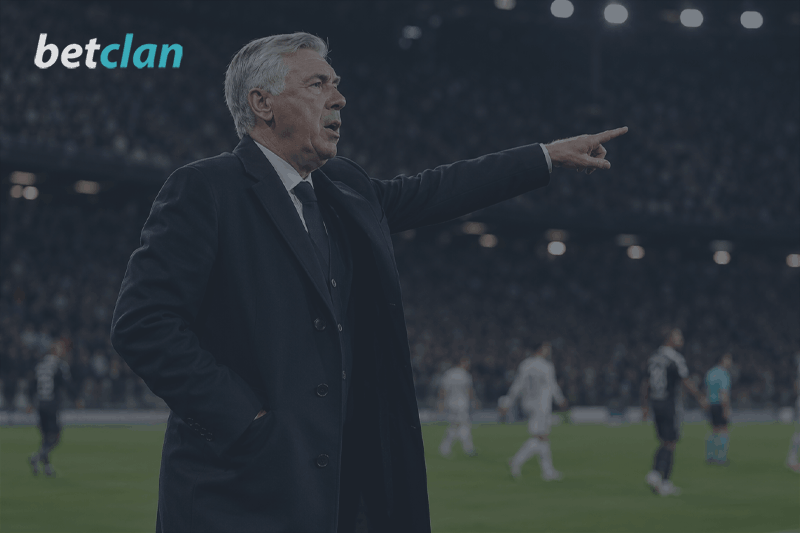
Discover the best football managers of all time, with a complete analysis of each master of the game, including legacy, titles, tactical ideas, leadership, cultural influence, and lasting impact.
The Minds That Transformed World Football
Football lives through extraordinary players, unforgettable goals, dramatic finals, and moments of individual talent that remain forever in the memory of supporters. However, behind the greatest teams in history, there is almost always a figure capable of turning talent into organization, ambition into performance, and pressure into victories. That figure is the manager. The best football managers of all time were not only men who won titles. They were leaders, strategists, managers of emotions, creators of identity, and, in many cases, true revolutionaries of the game.
Over the decades, the role of the manager has changed profoundly. In the past, many coaches were mainly seen as selectors of players or disciplinarians. Today, an elite manager needs to master tactics, communication, data analysis, physical preparation, psychology, dressing room management, individual development, and long-term planning. Modern football is too competitive to depend only on inspiration. Winning teams need method, vision, and leadership.
This article analyses the greatest managers in football history with a complete and balanced approach. It is not only about counting trophies, although titles are naturally important. It is also important to understand who changed the game, who created dynasties, who influenced generations of managers, who built lasting identities, and who managed to adapt to different competitive contexts.
What Makes a Manager a Historical Figure?
A great manager is not only someone who wins in a favourable era. True greatness appears when a coach manages to maintain performance over time, rebuild teams, deal with different generations of players, and remain relevant even when football changes around him. Longevity is one of the hardest tests in football, because every model eventually gets studied, challenged, and worn down.
There are also managers who did not have such long careers at the top, but left a deep tactical mark. Some changed the way teams press, others gave new importance to possession, others perfected defensive organization, others valued quick transitions, and some were pioneers in the way they mentally prepared players. Football evolves through these ideas.
Another essential factor is human leadership. A manager can have a brilliant idea, but if he cannot convince the players, that idea dies on paper. The greatest coaches know how to communicate, protect the group, demand more, manage stars, recover players in crisis, and keep the squad focused during months of intense competition. In elite football, the difference between a good team and a champion team is often found in that invisible detail.
The Best Football Managers of All Time
1. Sir Alex Ferguson
Sir Alex Ferguson is frequently placed at the top of any discussion about the greatest managers in history, and with good reason. His work at Manchester United is one of the most impressive examples of prolonged leadership in modern football. For more than two decades, Ferguson did not only win; he rebuilt several winning teams, adapting to new generations, new rivals, and new competitive demands.
The greatness of Ferguson lies in his rare ability to control cycles. Many managers can build one great team. Few can dismantle it at the right moment and build another without losing the winning identity. Ferguson did this several times. He worked with players of very different profiles, from experienced leaders to young talents developed at the club, and managed to create a culture where winning was a daily obligation.
The Manchester United of Ferguson became known for intensity, belief until the end, and the ability to score in decisive moments. More than a rigid tactical model, Ferguson created a mentality. His teams could change systems, replace players, and adapt plans, but they always maintained the same competitive conviction. That is perhaps the greatest compliment that can be paid to a manager: his team carried his personality.
2. Rinus Michels
Rinus Michels is an unavoidable figure because he helped change the language of football. Associated with Total Football, he developed an idea of play where players occupied spaces intelligently, exchanged positions, pressed collectively, and participated in several phases of the game. This vision was revolutionary at a time when many teams still operated with more fixed structures.
The work of Michels at Ajax and with the Netherlands national team deeply influenced European football. His team did not limit itself to attacking well. It moved like a collective organism, where each player understood the space left by a teammate and the function he had to assume. That positional intelligence became one of the foundations of modern football.
Michels is important because his influence goes beyond titles. Without his vision, it would be difficult to understand the later evolution of managers such as Johan Cruyff, Pep Guardiola, and many others. His legacy lives in any team that values possession, mobility, coordinated pressing, and rational occupation of the pitch.
3. Pep Guardiola
Pep Guardiola is one of the most influential managers of the 21st century. His Barcelona between 2008 and 2012 became a global reference for the way it controlled matches through the ball. With players such as Lionel Messi, Xavi, Andres Iniesta, and Sergio Busquets, Guardiola built a team that combined exceptional talent with almost perfect collective organization.
The merit of Guardiola is not only that he worked with great players. Many managers had great squads and did not create something so remarkable. Guardiola gave structure to talent. His team knew how to attract pressure, create superiorities, recover the ball quickly, and emotionally dominate opponents through possession. The game looked simple, but it was the result of enormous collective complexity.
After Barcelona, Guardiola continued to evolve at Bayern Munich and Manchester City. In England, he once again transformed the way many teams think about building from the back, the positioning of full-backs, the role of midfielders, and the occupation of interior spaces. His influence is so great that many clubs began looking for managers with similar ideas, even without having players of the same quality.
4. Arrigo Sacchi
Arrigo Sacchi was one of the great tactical revolutionaries of European football. His AC Milan from the late 1980s and early 1990s continues to be studied for its collective organization, coordinated defensive line, high pressing, and compactness between sectors. Before Sacchi, Italian football was frequently associated with more cautious models. Sacchi brought a modern, intense, and collective idea.
The Milan of Sacchi had extraordinary players, such as Franco Baresi, Paolo Maldini, Carlo Ancelotti, Ruud Gullit, Frank Rijkaard, and Marco van Basten. But what made that team historic was the way everyone functioned within a system. The team pressed as a block, reduced spaces, defended forward, and attacked with coordinated movements.
Sacchi proved that a team could be dominant without depending only on individual inspiration. Organization was the main star. His impact is visible in many modern managers who value distance between lines, collective pressing, and defensive synchronization. He was a manager who helped transform football into a more rigorous collective science.
5. Carlo Ancelotti
Carlo Ancelotti represents a different form of greatness. While some managers are remembered for rigid systems or tactical revolutions, Ancelotti is recognized for flexibility, serenity, and the ability to manage great players. He is one of the most successful and respected managers in history, precisely because he can adapt his ideas to the context instead of always forcing the same model.
The career of Ancelotti went through giant clubs and dressing rooms full of stars. AC Milan, Chelsea, Paris Saint-Germain, Bayern Munich, and Real Madrid are examples of demanding contexts where human management is as important as tactics. His calmness is a leadership tool. In environments of enormous pressure, Ancelotti transmits stability.
His success in the Champions League reinforces his historical status. Ancelotti knows how to prepare great European nights, manage rhythms, protect decisive players, and adjust the team without creating instability. His great lesson is simple, but rare: a manager does not need to be noisy to be dominant. He can win through balance, trust, and emotional intelligence.
6. Johan Cruyff
Johan Cruyff was one of the most important figures in football history, both on and off the pitch. As a manager, he profoundly transformed Barcelona and left a heritage that still influences the club and world football today. The so-called Dream Team was not only a winning team. It was the beginning of a modern identity.
Cruyff defended courageous, technical, and intelligent football. For him, the ball was a form of control, and space was the true battlefield. Players had to think before opponents, occupy the right zones, and understand the game beyond their nominal position. This vision became a foundation for future generations.
The influence of Cruyff is impossible to separate from the evolution of Guardiola and the modern Barcelona school. He changed the academy, the mentality, and the culture of the club. Few managers managed to leave such a deep mark on an institution. Cruyff did not only coach teams; he helped create a way of seeing football.
7. Jose Mourinho
Jose Mourinho is one of the most important managers of the modern era. His rise at FC Porto was extraordinary, culminating in the conquest of the UEFA Cup and the Champions League. He later confirmed his status at Chelsea, Inter Milan, Real Madrid, Manchester United, and Roma, always with a very distinctive competitive personality.
Mourinho stood out for strategic preparation, defensive organization, reading the weak points of the opponent, and the ability to create emotionally shielded groups. His teams often played with a sense of collective mission. The Inter Milan team that won the treble is perhaps the most complete example of his method: discipline, sacrifice, tactical intelligence, and efficiency in decisive moments.
Beyond the pitch, Mourinho changed communication in football. He dominated press conferences, protected players, diverted pressure, and created narratives favourable to his group. He can divide opinions, but his influence is undeniable. For several years, he was the manager everyone wanted to beat and many tried to imitate.
8. Bob Paisley
Bob Paisley is one of the most efficient managers in history. At Liverpool, he succeeded Bill Shankly and led the club into an era of enormous national and European success. His career as head manager was relatively short compared with other names on this list, but the volume and importance of the titles he won make his legacy impressive.
Paisley was not a manager of great media spectacle. His leadership was discreet, practical, and deeply competent. He knew the game, understood players, and knew how to maintain a winning team without losing balance. Often, the quietest managers are also the hardest to evaluate, because their influence appears more in results than in memorable phrases.
The Liverpool of Paisley was a competitive machine. The team maintained identity, renewed pieces, and continued winning. His legacy shows that continuity, internal knowledge, and intelligent decisions can create a dynasty. Paisley deserves to be among the greatest because he transformed heritage into dominance.
9. Bill Shankly
Bill Shankly may not have won as much as Paisley, but without him modern Liverpool would not have been the same. When he arrived at the club, he found an institution far from the status it would later reach. With vision, energy, and a deep connection with supporters, he rebuilt Liverpool inside and outside the pitch.
Shankly created culture. That is something that goes beyond tactics. He gave Liverpool an identity based on work, solidarity, pride, and ambition. He made the supporters believe again, made the club competitive, and laid the foundations for everything that came afterwards.
His impact shows that some managers are greater than their own titles. Shankly was a builder. He transformed a club, a football city, and a collective mentality. His greatness lies in the fact that his work remained present even after others won the trophies that followed.
10. Helenio Herrera
Helenio Herrera was one of the first great global figures in the role of manager. His work at Inter Milan marked European football in the 1960s and helped professionalize the role of the coach as the total leader of the team. Associated with catenaccio, Herrera created a disciplined, competitive, and mentally very strong Inter.
Although he is often reduced to defensive organization, Herrera was much more than that. He was a master of motivation, discipline, physical preparation, and psychological control. He understood that a winning team needed more than good players. It needed absolute focus, clear rules, and collective belief.
The Grande Inter became a reference for organization, competitiveness, and efficiency. Herrera showed that the manager could be a central figure, almost as important as the stars on the pitch. His legacy lies in the way he elevated the authority and responsibility of the modern manager.
Honourable Mentions
A list about the greatest managers in history can never include all relevant names. Vicente del Bosque deserves recognition for the calm and effective way he led Real Madrid and the Spanish national team. Marcello Lippi won at the highest level with clubs and national team. Jupp Heynckes left a very strong mark at Bayern Munich, especially through the dominant team he built at the beginning of the 2010s.
Arsene Wenger also deserves mandatory recognition. He transformed Arsenal, modernized training methods in England, and had huge influence on nutrition, physical preparation, and player development. Louis van Gaal marked several generations with his structural vision. Ernst Happel, Ottmar Hitzfeld, Brian Clough, Zinedine Zidane, Vicente Feola, and Luis Aragones also belong in any serious discussion about historic managers.
Why Is It So Difficult to Compare Managers from Different Eras?
Comparing managers from different eras is a complex task because football has changed profoundly. A manager from the 1960s worked with very different resources from those available today. There was not the same video analysis, the same sports science, the same data departments, the same global media pressure, or the same international player market.
On the other hand, older managers had their own challenges. Less technology meant greater dependence on direct observation, intuition, and personal authority. Pitches were different, travel was more difficult, preparation was less specialized, and squads were less protected. Every era has its own difficulties.
Therefore, the best way to evaluate greatness is not only to compare numbers. It is to understand the impact of each manager in his time. Who dominated? Who innovated? Who changed clubs? Who created a school? Who influenced the future? It is in that combination of context, results, and legacy that the true giants emerge.
The Different Ways to Be a Great Manager
There is no single formula for greatness on the bench. Ferguson was a master of longevity and rebuilding. Guardiola represents tactical sophistication and positional control. Ancelotti is a symbol of human management and adaptation. Mourinho personifies strategic competitiveness. Sacchi and Michels changed the game through collective ideas. Cruyff transformed a culture. Shankly built an identity. Paisley continued dominance. Herrera elevated the figure of the manager.
This diversity is exactly what makes football fascinating. A team can win with possession or transition, with high pressing or a low block, with free stars or collective discipline. What all great managers have in common is the ability to convince players. Without that trust, no idea survives.
Conclusion
The best football managers of all time were much more than winners. They were architects of teams, creators of cultures, tactical innovators, and leaders capable of transforming groups of players into something greater. Sir Alex Ferguson built a long-term dynasty. Rinus Michels changed the structure of the game. Pep Guardiola elevated possession and positioning to an artistic level. Arrigo Sacchi redefined collective organization. Carlo Ancelotti showed the power of serenity. Johan Cruyff created a philosophy. Jose Mourinho marked the modern era with competitiveness and strategy. Bob Paisley and Bill Shankly shaped Liverpool. Helenio Herrera helped define the manager as a central figure in football.
In the end, great managers always leave something behind. It can be a room full of trophies, a tactical idea, a club culture, a generation of transformed players, or an entire school of followers. Players decide matches, but managers build the worlds where those matches make sense. That is why these names continue to be studied, discussed, and admired by those who truly love football.
Explore the best enforcers in NHL history, from Bob Probert and Tie Domi to Dave Semenko, Dave Schultz and other legendary figures who shaped hockeys physical identity.
Africa is rapidly emerging as a key market for sports betting, driven by a young, sports-loving population, increasing internet access, and relaxed regulations. While Nigeria and South Africa lead the industry, countries like Kenya, Tanzania, and Ghana are also growing quickly.
Relive the most iconic moments in Cricket World Cup history, from Kapil Dev and Dhoni to the 2019 final and Maxwells miracle, in a journey through the tournaments greatest drama.
Learn to effectively analyze soccer games for betting, taking into account statistics, team form, head-to-head encounters, and much more.
Learn how to identify hidden opportunities in less publicized tennis tournaments and turn your knowledge into consistent profit. Practical strategies to bet smartly on ATP 250, Challengers, and ITF events.
A professional, era-aware ranking of the 10 greatest baseball teams ever, with clear criteria, deep context, roster construction notes, and why each team’s dominance still holds up today.
Explore how Manuel Neuer redefined the goalkeeper role across 556 appearances for Bayern Munich, inspiring fans globally, including Ethiopia.
Discover the best quarterbacks in NFL history, from legends like Joe Montana and Tom Brady to modern stars like Patrick Mahomes, with career highlights, impact, and legacies.
Explore how Melbet expands online betting access in Uganda through mobile technology, diverse sports markets, and digital platforms.
Learn how to analyze sporting events in real time for live betting by evaluating momentum, statistics, tactics, and changing match conditions.